
Innovative Tech Education Developments in Nigeria, Trends and Opportunities.
In 2025, Nigeria’s technology education sector is witnessing an exciting digital transformation. From groundbreaking government policies to cutting-edge innovation hubs, the country is positioning itself as Africa’s next digital talent powerhouse. This post explores the latest developments, major initiatives, challenges, and opportunities shaping the future of tech education in Nigeria.

Latest Developments and Innovations
National EdTech Strategy & Digital Learning Transformation
In August 2025, the Federal Ministry of Education unveiled the National EdTech Strategy — a nationwide framework to make digital learning accessible and efficient for all Nigerian students.
Also, the EdTech Indaba 2025 Summit, themed “Smart Learning for a Smart Future,” brought together educators and policymakers to map out the next phase of technology-driven education.
The 3 Million Technical Talent (3MTT) Programme
Launched by the Ministry of Communications and NITDA, the 3MTT Programme aims to train 3 million Nigerians in digital skills like:
-
- Software Engineering
-
- AI and Data Science
-
- Cybersecurity
-
- UI/UX Design
-
- Cloud Computing
This hybrid (online + offline) model ensures inclusivity across all regions.
University-Level Digital Transformation: Blueprint-ICT-Dev Project
Nigeria and France jointly launched the Blueprint-ICT-Dev Project, valued at €38 million, to upgrade digital infrastructure in federal universities — enhancing e-learning, research systems, and administration.
Digital Literacy in Basic Education
The NITDA-UBEC partnership now integrates digital literacy into Nigeria’s primary and secondary curricula, ensuring early exposure to computing, coding, and online learning.
Similarly, Lagos State’s Eko Digital Initiative trained over 100,000 students across 720 schools in ICT and digital innovation.
Innovation Hubs and Regional Ecosystems
The Ilorin Innovation Hub officially opened in 2025 — offering incubation programs, startup funding, and leadership training for tech innovators.
STEM, AI & Robotics Integration in Schools
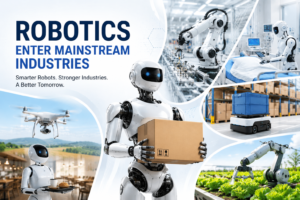
Across Nigeria, schools are integrating STEM, robotics and AI-based learning into their lesson plans — helping students understand real-world problem-solving early.

Challenges & Critical Gaps
Despite the progress, several obstacles remain:
-
- Infrastructure & Internet Access: Many rural schools lack reliable electricity and devices.
-
- Teacher Training: Educators need continuous support for digital teaching methods.
-
- Equity & Access: The urban-rural gap in digital literacy persists.
-
- Funding Sustainability: Many initiatives depend on donor funding.
-
- Curriculum Alignment: Tech subjects must integrate naturally without overburdening learners.
Conclusion
Nigeria’s tech education landscape in 2025 is vibrant, ambitious, and on a clear upward trajectory. With strategic government initiatives like the National EdTech Strategy and 3MTT Programme, combined with private-sector collaborations and innovation hubs, the nation is building a foundation for a digitally empowered generation.
To sustain momentum, stakeholders must prioritize connectivity, teacher capacity, and equitable access — ensuring that no learner is left behind in this digital revolution. The future of education in Nigeria is not just tech-driven; it’s transformational.
About The Author
Olu-Tope Abraham
A technology and innovative writer, mobile and digital gadget expert with years of experience reviewing smartphones, computers, smartlife and interpreting industry trends. Passionate about helping users make informed tech decisions, he brings deep insights into the latest and future ready trends in global market.