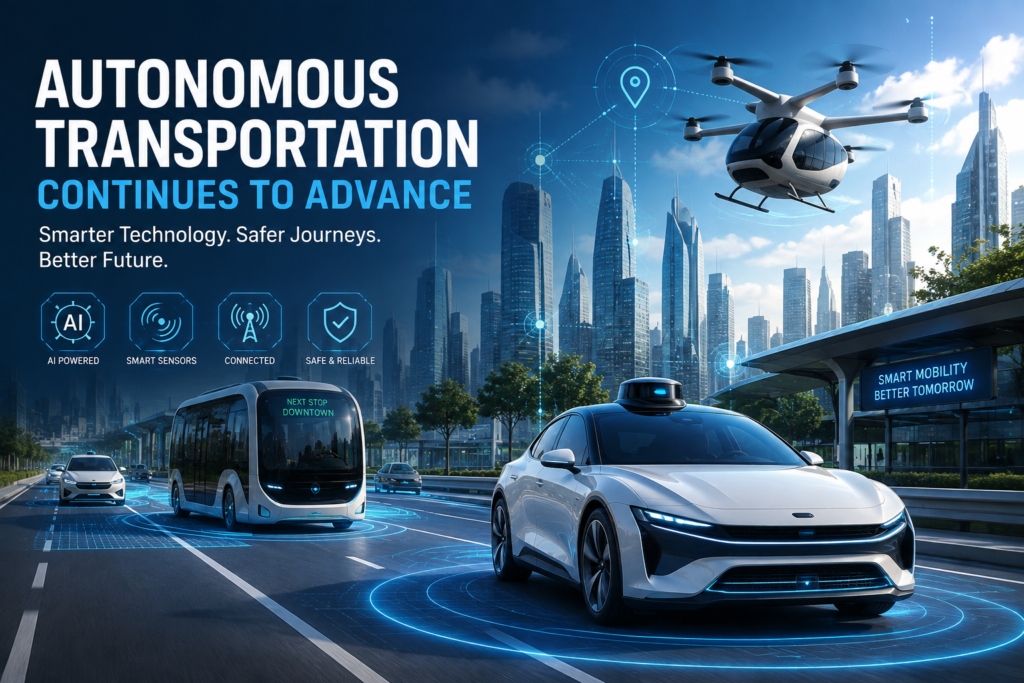
Transportation technology is evolving beyond electric vehicles. In 2026, autonomous systems, intelligent traffic management and connected infrastructure are expected to play a larger role in improving road safety, reducing congestion and enhancing mobility.
Self-driving technologies continue to mature through advancements in sensors, cameras, radar, lidar and AI-powered decision-making. While fully autonomous vehicles are not yet common everywhere, driver-assistance features are becoming increasingly sophisticated and widely available.
Public transportation systems are also integrating smart technologies, including predictive maintenance, digital ticketing, real-time passenger information and optimized route planning.
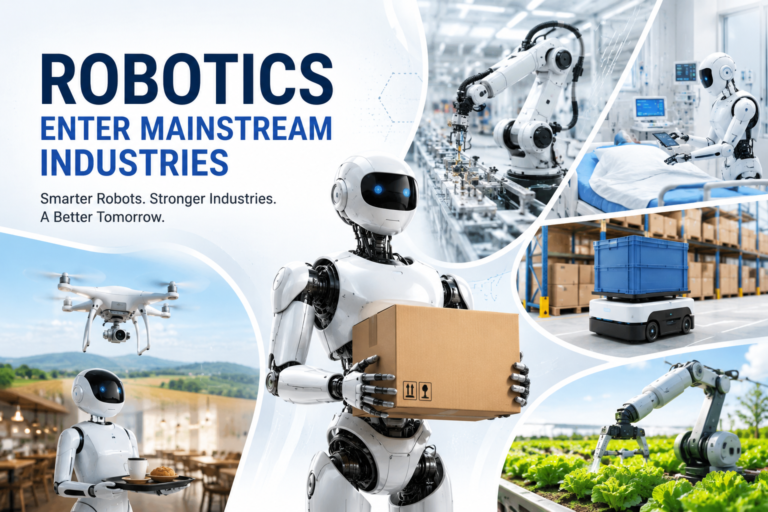
Delivery services are experimenting with autonomous robots and drones for last-mile logistics, particularly in controlled environments such as campuses, warehouses and selected urban areas.
As cities continue investing in connected infrastructure, vehicles will increasingly communicate with roads, traffic signals and other vehicles to improve safety and traffic flow.
Major Developments
- Advanced driver assistance systems (ADAS)
- Autonomous shuttles
- Smart traffic management
- Drone-assisted deliveries
- Connected vehicle ecosystems
- Intelligent logistics
Benefits
- Improved road safety
- Reduced traffic congestion
- Greater fuel efficiency
- Lower transportation costs
- Faster logistics
- Enhanced accessibility
Looking Ahead: The Future Beyond 2026
Technology is not evolving in isolation. Artificial intelligence, cloud computing, robotics, cybersecurity and next-generation networks are increasingly working together to create intelligent ecosystems that improve productivity and everyday life.
Several trends are likely to continue gaining momentum beyond 2026:
- Greater collaboration between humans and AI
- More energy-efficient computing
- Stronger cybersecurity and privacy protections
- Increased automation across industries
- Expansion of smart cities
- Continued investment in digital infrastructure
- Wider adoption of immersive technologies
- Responsible and ethical AI development
For businesses, embracing these innovations can improve operational efficiency, enhance customer experiences and open new opportunities for growth. For individuals, continuous learning and digital literacy will remain essential in an increasingly technology-driven world.
Frequently Asked Questions (FAQ)
1. What is the biggest technology trend in 2026?
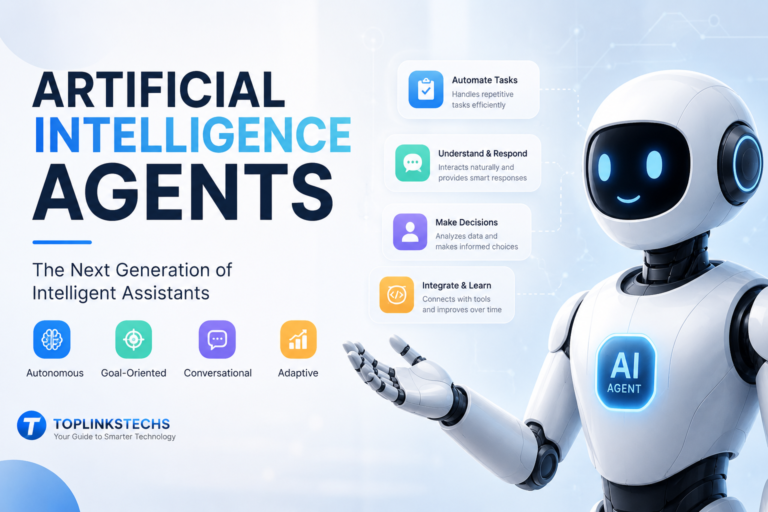
Artificial Intelligence (AI), particularly AI agents capable of handling complex workflows, is expected to be one of the most influential technology trends shaping 2026.
2. Will 6G replace 5G in 2026?
No. While research and pilot projects are progressing, 5G will remain the primary commercial mobile network in most regions. 6G development in 2026 focuses largely on testing, standards and early innovation.
3. Why is cybersecurity becoming more important?
As organizations adopt cloud services, AI, connected devices and remote work, the number and sophistication of cyber threats continue to grow. Strong cybersecurity helps protect sensitive data, maintain business continuity and build user trust.
4. How is AI changing healthcare?
AI supports earlier disease detection, assists medical professionals with diagnostics, enables remote patient monitoring and helps personalize treatment plans based on patient data.
5. Which technology skills should I learn in 2026?
High-demand skills include:
- Artificial Intelligence
- Cybersecurity
- Cloud Computing
- Software Development
- Data Analytics
- DevOps
- Networking
- Edge Computing
- UI/UX Design
- Machine Learning
Conclusion
The technology landscape in 2026 is defined by intelligent automation, connected ecosystems, and a growing emphasis on sustainability, security, and human-centered innovation. From AI agents and advanced robotics to edge computing, immersive experiences and smarter healthcare, these trends are reshaping industries and creating new possibilities for businesses and individuals alike.
Staying informed about emerging technologies is no longer optional—it is essential for professionals, entrepreneurs, students and organizations seeking to remain competitive in a rapidly evolving digital world.
As innovation accelerates, the ability to adapt, learn and responsibly implement new technologies will become one of the most valuable skills of the decade.
Which technology trend do you believe will have the greatest impact on our future?
Share your thoughts in the comments below and join the conversation.
If you found this article helpful, subscribe to Toplinks Techs for expert insights, technology news, practical tutorials and the latest updates on AI, cybersecurity, software development, gadgets and digital innovation. << Previous Part
The Author
Olu-Tope Abraham — is a writer, editor and developer at Toplinks Techs, a technology-focused platform dedicated to delivering premium updates on smartphones, gadgets, AI innovations, software, digital trends and future technology. The platform provides insightful reviews, buying guides, tutorials and tech news designed for modern digital audiences.