
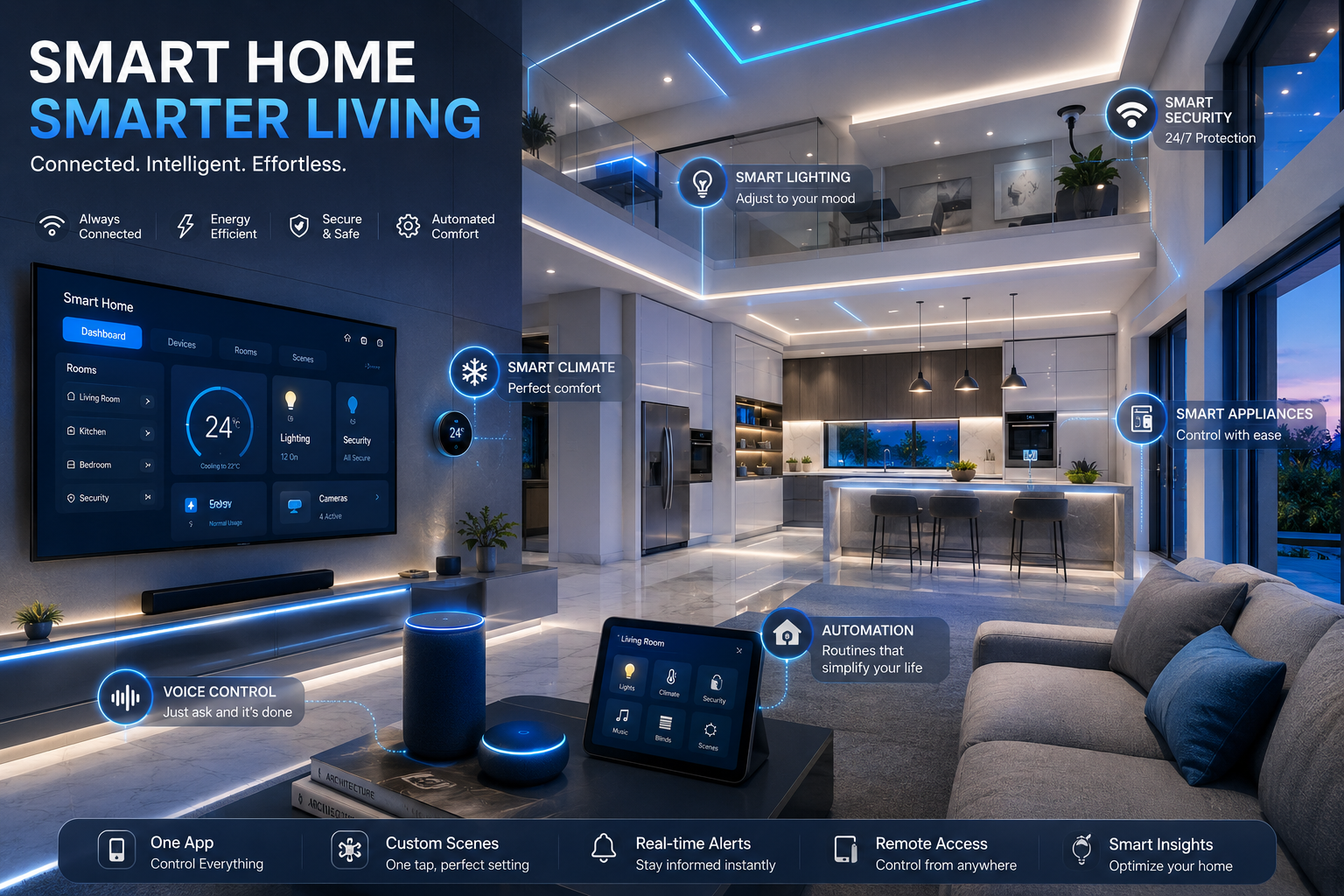
Technology is turning ordinary homes into intelligent living spaces
Smart home technology continues to transform modern living in 2026. Connected devices, automation systems, and AI-powered assistants are helping homeowners improve convenience, security, and energy efficiency.
The growing popularity of smart ecosystems has made it easier for users to control lighting, entertainment, appliances, and security systems directly from smartphones or voice commands.
Voice-Controlled Assistants
Voice assistants remain central to smart home experiences. Modern AI assistants now understand natural conversations better and can perform multiple tasks simultaneously.
Users can control lights, set reminders, play media, and manage home appliances using simple voice commands. Integration between devices has also improved significantly.
Smart Security Systems
Home security technology has become smarter and more accessible. AI-powered security cameras can detect unusual movements, recognize familiar faces, and send real-time alerts to homeowners.
Smart locks and video doorbells provide remote access control and improve household safety even when users are away from home.
Energy Efficiency and Automation
Smart thermostats and automated lighting systems help reduce energy consumption by adjusting settings based on user behavior and environmental conditions.
These technologies not only lower electricity costs but also support environmental sustainability by minimizing unnecessary energy waste.
Smart Entertainment Systems
Entertainment systems are becoming more connected and immersive. Smart TVs, wireless speakers, and streaming platforms now integrate seamlessly within home ecosystems.
AI recommendations also help personalize content based on viewing habits and preferences.
Health and Wellness Integration
Smart homes are also supporting healthier lifestyles through connected wellness devices. Air quality monitors, smart fitness equipment, and sleep tracking technologies help users maintain healthier living environments.
Some systems can even monitor indoor temperature and humidity automatically for better comfort.
Challenges and Privacy Concerns
Despite their advantages, smart home devices still raise concerns about data privacy and cybersecurity. Users are encouraged to secure their networks and update device software regularly.
Manufacturers are also improving encryption and privacy settings to protect user data.
Conclusion
Smart home technology in 2026 is reshaping how people interact with their living spaces. Improved automation, AI integration, and connected ecosystems are creating more comfortable, efficient, and secure homes. As innovation continues, smart homes will become even more intelligent and essential in everyday life.
The Author
Olu-Tope Abraham — is a writer, editor and developer at Toplinks Techs a technology-focused platform dedicated to delivering premium updates on smartphones, gadgets, AI innovations, software, digital trends and future technology. The platform provides insightful reviews, buying guides, tutorials and tech news designed for modern digital audiences.