
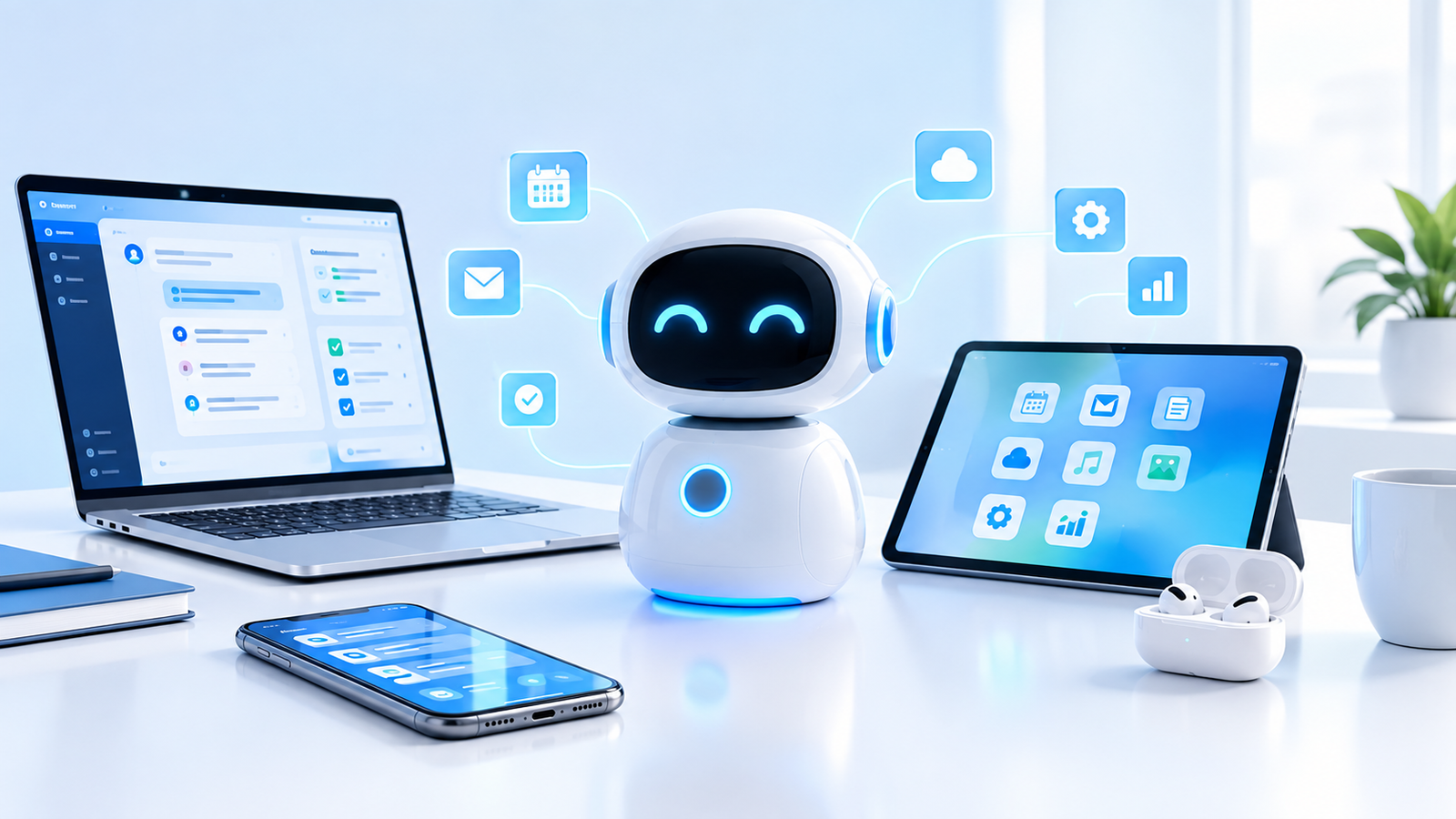
Technology is most useful when it solves a real problem. AI Agents Are Becoming Everyday Digital Assistants is part of a wider shift toward faster, more connected and increasingly intelligent digital experiences.
Instead of focusing only on specifications or hype, this guide looks at AI agents 2026 from a practical point of view. The aim is to help everyday users, creators, students, IT professionals and small businesses understand where the technology can help, what limitations to consider and how to adopt it without creating unnecessary cost or complexity.
What You Should Know
In simple terms, AI agents 2026 is valuable when it improves a task that people already need to perform. A useful technology should save time, improve reliability, make information easier to access, strengthen security, or provide a better user experience. The newest feature is not automatically the most useful one. Before adopting a device or service, consider compatibility, privacy, security, maintenance, connectivity and total cost. These factors often matter more in daily use than a specification printed on a product page.
Main Benefits
Efficiency: Technology can reduce repetitive work and make routine tasks easier to organize.
Convenience: Connected tools can put useful information and controls closer to the user.
Productivity: Good digital workflows can help individuals and teams spend more time on meaningful work.
Scalability: Businesses can begin with a small use case, measure results and expand gradually.
Risks and Responsible Use
Privacy should be considered before connecting personal, financial, business or sensitive information to a new service. Review permissions, account controls and data-retention options where available. Security is also important: use strong authentication, install updates promptly, maintain backups and avoid giving an application more access than it needs. For AI-enabled products, remember that generated information can be incomplete or incorrect, so important decisions should receive human review. Businesses should also document ownership, support procedures and a recovery plan before deploying technology widely.
Simple Steps to Get Started
- Define the problem you want the technology to solve.
- Choose the simplest tool that meets the requirement instead of adding unnecessary complexity.
- Review privacy, security, compatibility and total cost before committing.
- Start with one device, team or workflow and test it.
- Measure whether it actually saves time, reduces errors, improves security or increases convenience.
- Keep a backup or fallback process for important tasks.
For IT Professionals and Businesses
For IT teams, AI agents 2026 should fit into an existing technology lifecycle. Document the current environment, test changes before broad deployment, assign clear ownership and keep a rollback option. Training matters because even well-designed technology can create support problems when users do not understand it. Where automation or AI is involved, use least-privilege access, monitoring and human escalation for high-impact actions. A small, measurable pilot is often a better starting point than a large deployment with unclear goals.
FAQs
Q: Is AI agents 2026 necessary for everyone?
A: No. Its value depends on individual needs, budget, existing equipment and the problem being solved.
Q: Should I always choose the newest technology?
A: No. Reliability, support, security updates and compatibility can be more important than novelty.
Q: What is the first thing to check before using a new digital tool?
A: Check what it does with your data, what permissions it needs, how it is updated and what the total cost will be.
Conclusion
AI Agents Are Becoming Everyday Digital Assistants is best approached as a practical technology decision rather than a trend to follow automatically. Start with a clear need, protect your information, test the solution and measure the result. As digital services become more connected, these basic habits will help users gain the benefits of new technology while reducing avoidable cost, privacy problems and security risks.
Read next: The Rise of Personal AI PCs
About the Author
Olu-Tope Abraham — is a writer, editor and developer at Toplinks Techs, a technology-focused platform dedicated to delivering premium updates on smartphones, gadgets, AI innovations, software, digital trends and future technology. The platform provides insightful reviews, buying guides, tutorials and tech news designed for modern digital audiences.
Toplinks Techs — Innovate. Explore. Elevate. Tech That Inspires Progress.