Benefits of AI Agents in Everyday Life
The growing adoption of AI agents is expected to transform how people work, communicate, learn, and manage everyday responsibilities. Some of the major benefits include:
1. Increased Productivity
AI agents can handle repetitive and time-consuming activities such as scheduling appointments, organizing files, preparing reports, responding to routine emails, and summarizing information. This allows professionals to spend more time on important decisions and creative tasks.
2. Smarter Personal Assistance
Unlike basic voice assistants, modern AI agents can understand context and complete multiple steps to achieve a goal. They can help users organize schedules, plan trips, manage reminders, compare options, and coordinate different digital services.
3. Faster Business Automation
Businesses can use AI agents to automate workflows across departments. From processing customer requests to analyzing business data and generating reports, these systems can help organizations operate more efficiently while reducing manual workloads.
4. Improved Customer Experiences
AI agents can provide faster and more personalized customer support. They can understand customer questions, access relevant information, recommend solutions, and escalate complex issues to human employees when necessary.
5. Greater Accessibility
AI agents can make digital services easier to use for people with different abilities and levels of technical experience. Voice interaction, automated assistance, real-time translation, and personalized interfaces can make technology more accessible.
Challenges and Risks of AI Agents
Despite their advantages, AI agents introduce new challenges that organizations and individuals must consider. Because agents can interact with applications and potentially access sensitive information, security and privacy become particularly important.
Poorly configured AI agents could expose confidential data, make incorrect decisions, or perform unintended actions. Another challenge is reliability. AI agents can sometimes misunderstand instructions or generate inaccurate information. As AI agents become more autonomous, responsible AI governance will become increasingly important. Organizations will need to balance automation with accountability, ensuring that humans remain responsible for important decisions.
FAQs
What is an AI agent?
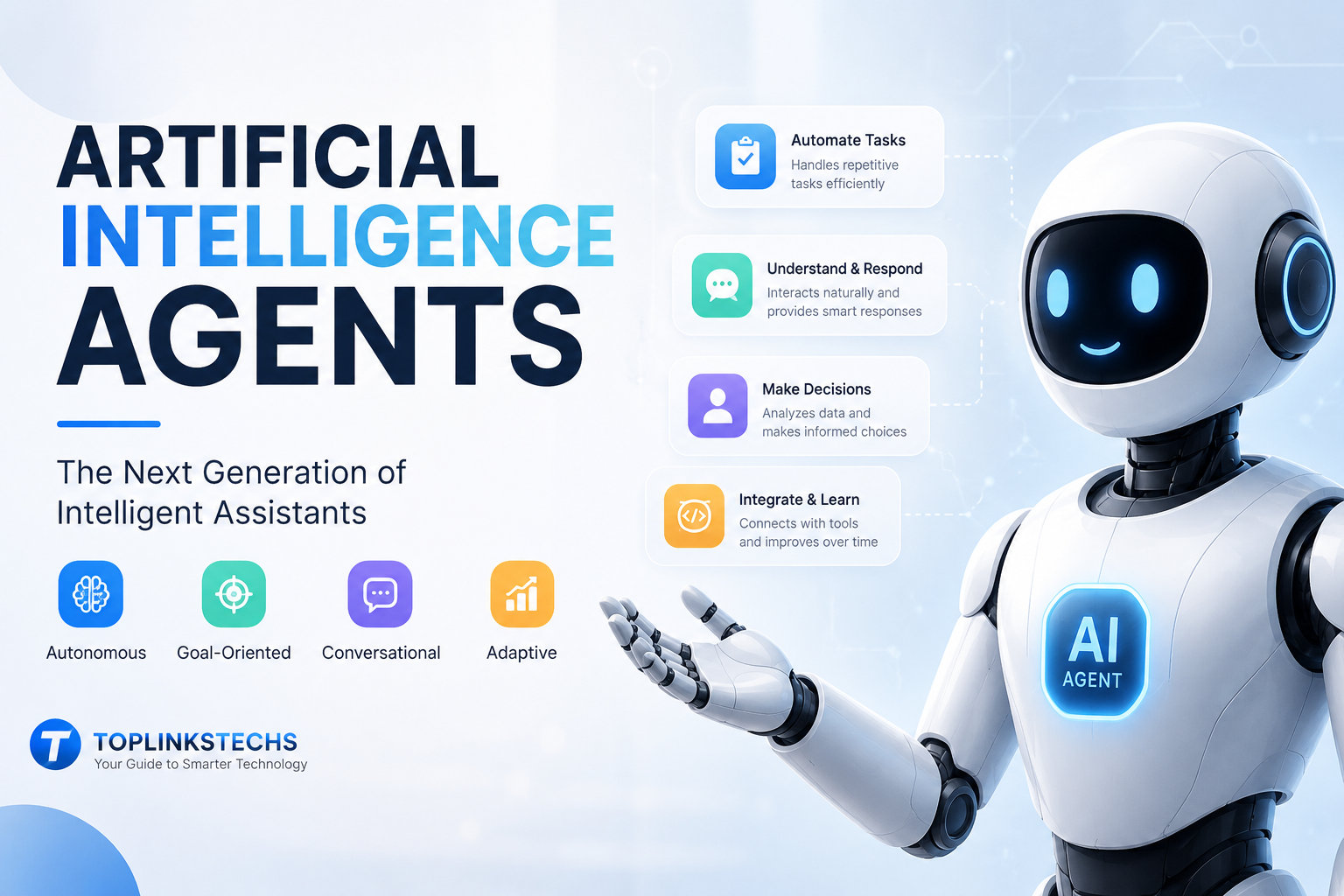
An AI agent is a software system that can understand objectives, plan tasks, use digital tools, and perform multiple actions with limited human intervention. Unlike traditional chatbots, AI agents are designed to complete workflows rather than simply respond to individual questions.
How are AI agents different from chatbots?
Traditional chatbots primarily respond to user messages. AI agents can go further by planning and executing a sequence of actions. For example, instead of simply explaining how to schedule a meeting, an AI agent may check calendars, identify available times, send invitations, and update the relevant records.
Will AI agents replace human workers?
AI agents are more likely to change how people work than completely replace humans. They can automate repetitive activities while allowing employees to focus on creativity, leadership, problem-solving, and tasks that require human judgment.
Are AI agents safe to use?
AI agents can be useful when properly designed and controlled, but they are not risk-free. Users should pay attention to the permissions an agent receives and avoid giving unnecessary access to sensitive information.
Can small businesses use AI agents?
Yes. Small businesses can use AI agents for customer support, marketing, appointment scheduling, document management, data analysis, and other repetitive workflows. This can help smaller teams accomplish more without significantly increasing their workforce.
Conclusion
AI agents are moving artificial intelligence from a question-and-answer technology toward a more proactive form of digital assistance. Their ability to understand goals, coordinate tasks, interact with applications, and adapt to changing requirements could significantly reshape everyday work and personal productivity.
As 2026 progresses, AI agents are likely to become an increasingly familiar part of the digital ecosystem. The organizations and individuals that learn to use them responsibly may gain significant advantages in productivity, efficiency, and innovation. << Previous Part Robotics Mainstream Industries
About the Author
Olu-Tope Abraham is an IT Support Specialist, Web Developer, Full Stack Developer, UI/UX enthusiast, and technology content creator with practical experience in web development, software solutions, digital technologies, and IT support. Through Toplinks Techs, he shares accessible and informative content covering artificial intelligence, emerging technologies, smartphones, software, cybersecurity, digital tools, and practical technology tutorials.
With a passion for helping people understand rapidly evolving technologies, Olu-Tope focuses on explaining complex technical concepts in a clear, practical and easy-to-understand manner.
Toplinks Techs — Innovate. Explore. Elevate. Tech That Inspires Progress.