
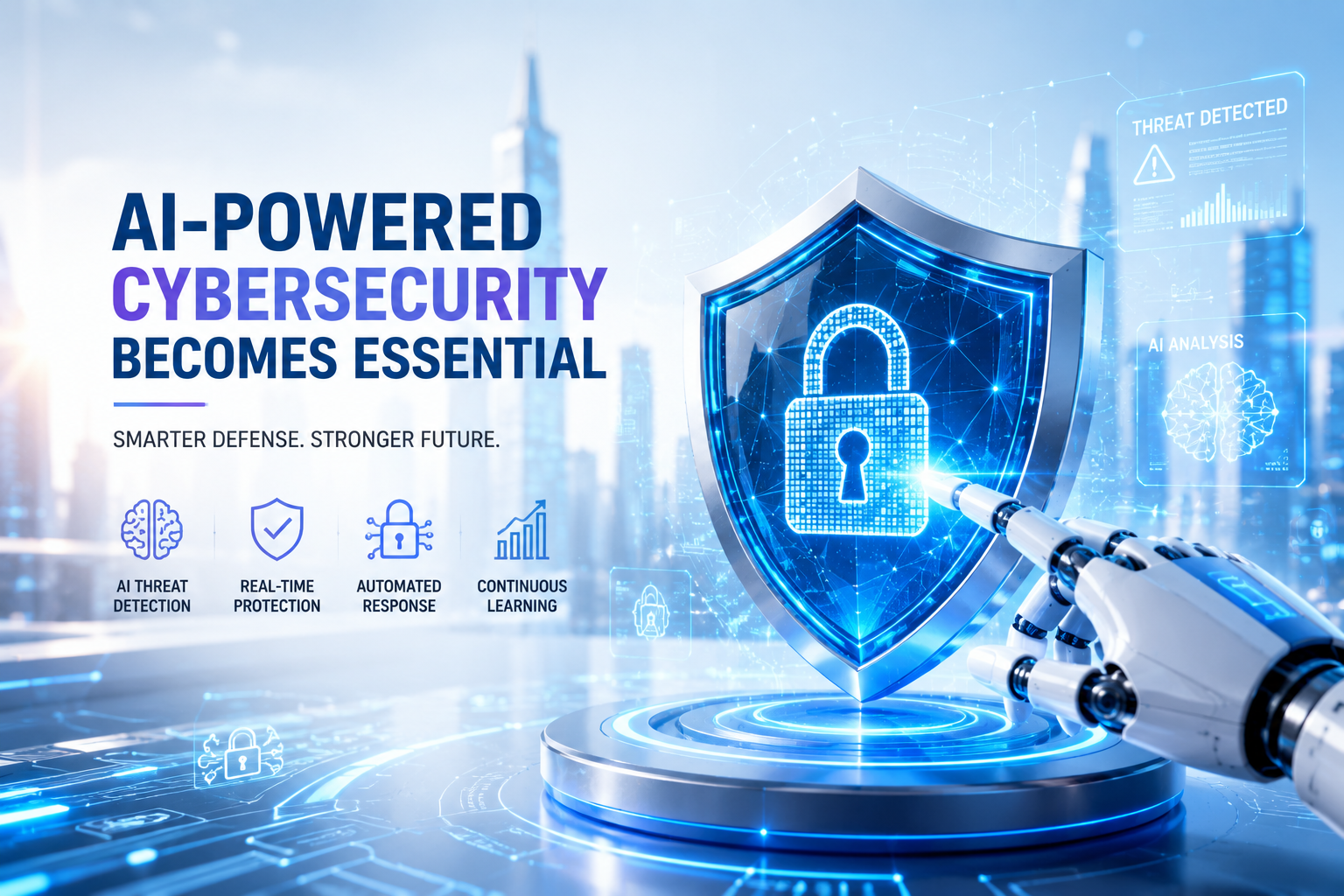
AI-powered cybersecurity is becoming an important part of modern digital protection because it can help organizations respond to threats faster and more efficiently.
Some of the major benefits include:
1. Faster Threat Detection
AI systems can continuously monitor networks, devices, applications, and user activity. By identifying unusual patterns in real time, they can detect potential threats before they develop into serious security incidents.
2. Automated Security Monitoring
Cybersecurity teams often have to process thousands of alerts every day. AI can analyze and prioritize these alerts, helping security professionals focus their attention on the most serious threats instead of manually investigating every notification.
3. Improved Protection Against New Threats
Traditional security tools may struggle with previously unknown attacks. Machine learning systems can identify suspicious behavior based on patterns and anomalies, providing an additional layer of protection against emerging threats.
4. Reduced Response Time
When a potential attack is detected, AI-powered systems can automatically trigger predefined security actions, such as isolating a suspicious device or blocking malicious activity. This can reduce the time between detection and response.
5. Stronger Fraud and Identity Protection
AI is increasingly being used to identify unusual login attempts, fraudulent transactions, account takeovers, and other suspicious activities. This can provide stronger protection for both businesses and individual users.
Challenges and Considerations
Despite its benefits, AI-powered cybersecurity is not a complete replacement for human security professionals. Cybercriminals can also use AI to create more convincing phishing campaigns, automate attacks, and discover vulnerabilities.
Organizations should therefore combine AI technologies with strong security policies, employee awareness training, regular software updates, data backups, access controls, and human oversight.
Privacy is another important consideration. Organizations must ensure that AI security systems are implemented responsibly and that sensitive information is handled according to applicable data protection requirements.
Frequently Asked Questions
What is AI-powered cybersecurity?
AI-powered cybersecurity uses artificial intelligence and machine learning to detect, analyze, prevent, and respond to digital security threats. It can monitor large volumes of data and identify suspicious behavior more quickly than many traditional manual processes.
Can AI replace cybersecurity professionals?
No. AI can automate repetitive tasks and improve threat detection, but cybersecurity professionals are still needed to investigate incidents, make strategic decisions, manage risks, and respond to complex attacks.
How does AI detect cyber threats?
AI analyzes patterns in network traffic, user behavior, system activity, and other security data. When activity differs significantly from expected patterns, the system can flag it for investigation or automatically take predefined defensive action.
Is AI cybersecurity useful for small businesses?
Yes. Small businesses can benefit from AI-enhanced antivirus software, endpoint protection, fraud detection, email security, and identity protection tools without necessarily maintaining a large in-house security team.
Conclusion
AI-powered cybersecurity is becoming essential as digital threats become more sophisticated and organizations become increasingly dependent on connected systems. From automated threat detection to faster incident response and improved fraud protection, artificial intelligence can provide valuable support for modern cybersecurity teams.
However, technology alone cannot guarantee complete protection. The strongest security strategy combines AI-powered tools with responsible data practices, regular updates, strong passwords, multi-factor authentication, employee training, backups, and human expertise.
As 2026 progresses, organizations and individuals that adopt a proactive approach to cybersecurity will be better positioned to protect their data, systems, and digital identities. |<< Previous Part 6G and Next Generation Technology… | Quantum Computing Commercial Reatity… Next Part >>|
The Author
Olu-Tope Abraham — is a writer, editor and developer at Toplinks Techs a technology-focused platform dedicated to delivering premium updates on smartphones, gadgets, AI innovations, software, digital trends and future technology. The platform provides insightful reviews, buying guides, tutorials and tech news designed for modern digital audiences.
Toplinks Techs — Innovate. Explore. Elevate. Tech That Inspires Progress.