
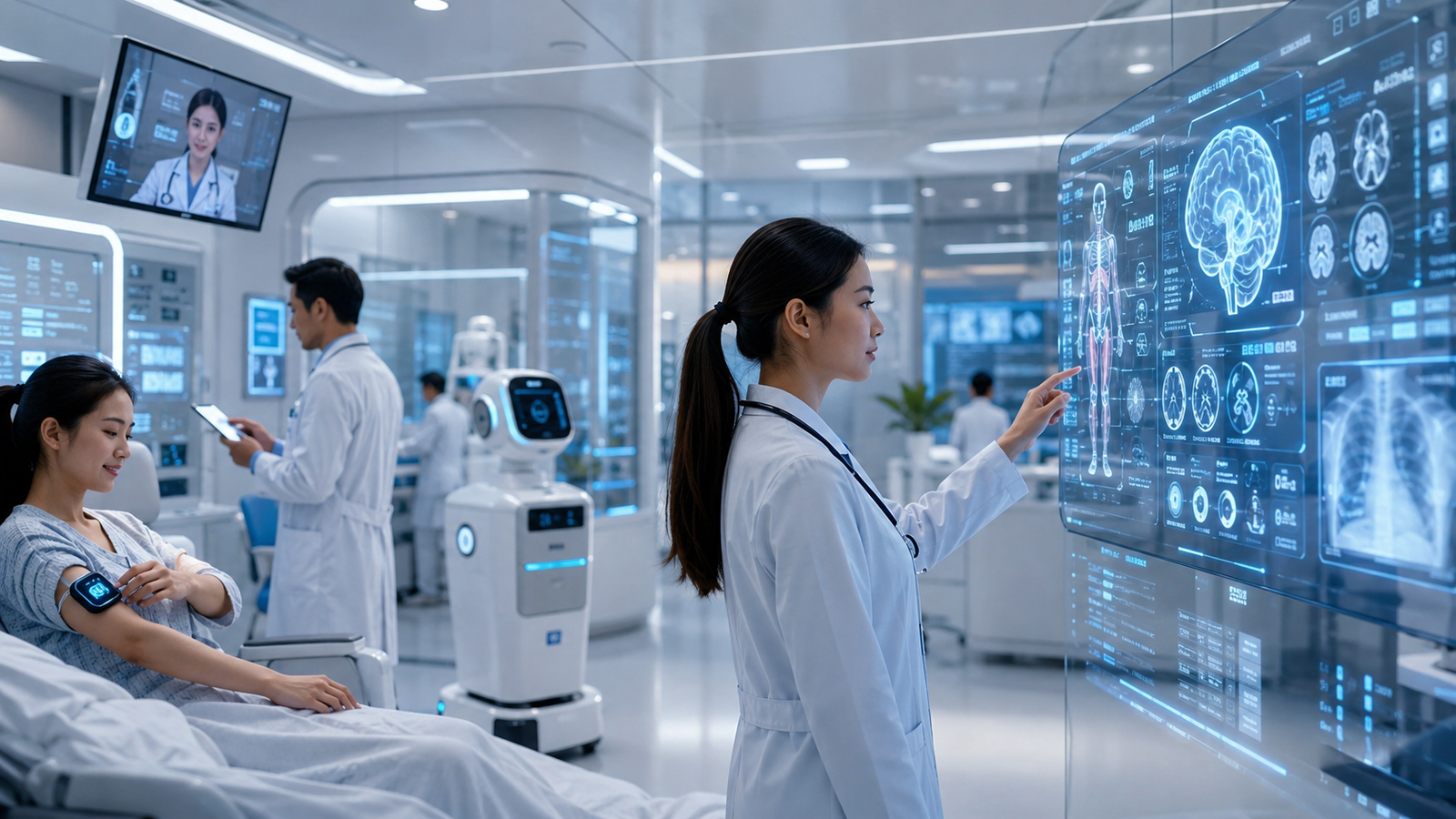
Healthcare continues to experience one of the fastest digital transformations, with 2026 expected to bring more accessible, data-driven and personalized medical services.
Advances in artificial intelligence, wearable devices, telemedicine and digital diagnostics are improving how patients receive care while helping healthcare providers make more informed decisions.
AI-powered diagnostic tools can assist clinicians in identifying diseases earlier by analyzing medical images, lab results and patient histories. Wearable devices now monitor heart rate, sleep quality, blood oxygen levels and other health metrics in real time, allowing users and healthcare professionals to detect potential issues sooner.
Telemedicine has also become a mainstream option for routine consultations, follow-up appointments and remote patient monitoring. This reduces travel time for patients and expands access to care in underserved communities.
Another growing trend is personalized medicine, where treatments are tailored to an individual’s genetic profile, lifestyle and health history. This approach has the potential to improve treatment outcomes while reducing unnecessary interventions.
Key Innovations
-
- AI-assisted diagnostics
-
- Remote patient monitoring
-
- Smart wearable health devices
-
- Personalized medicine
-
- Digital health records
-
- Telemedicine platforms
-
- Predictive healthcare analytics
Why It Matters
Technology is making healthcare more efficient, proactive, and patient-centered. While challenges such as data privacy and equitable access remain, continued innovation is expected to improve health outcomes and enhance the overall patient experience.
Frequently Asked Questions (FAQs)
1. How is artificial intelligence improving healthcare in 2026?
Artificial intelligence is helping healthcare professionals diagnose diseases earlier, analyze medical imaging with greater accuracy, identify health risks through predictive analytics and support treatment planning. AI acts as a clinical decision-support tool, enabling doctors to make faster and more informed decisions while reducing the likelihood of diagnostic errors.
2. What are the benefits of wearable health devices?
Modern wearable devices continuously monitor important health metrics such as:
- Heart rate
- Blood oxygen (SpO₂)
- Blood pressure (supported devices)
- Sleep quality
- Physical activity
- Stress levels
- Body temperature
- ECG readings (selected devices)
This continuous monitoring allows users to detect abnormalities early and share valuable health data with healthcare providers for more proactive care.
3. Is telemedicine as effective as in-person healthcare?
Telemedicine is highly effective for many healthcare services, including routine consultations, medication reviews, follow-up appointments, mental health support, chronic disease management and remote patient monitoring. However, emergencies, surgeries and complex physical examinations still require in-person medical care.
4. What is personalized medicine?
Personalized medicine is a healthcare approach that customizes treatment based on an individual’s genetics, medical history, lifestyle and environmental factors. Rather than using a one-size-fits-all approach, physicians can recommend therapies that are more likely to be effective while minimizing side effects.
5. Are digital health records secure?
Electronic Health Records (EHRs) are protected using advanced encryption, secure authentication, role-based access controls and regulatory compliance standards in many countries. While cybersecurity remains an ongoing challenge, healthcare providers continue investing in stronger security measures to safeguard patient information.
6. Can AI replace doctors?
No. AI is designed to assist—not replace—medical professionals. It helps analyze large volumes of data, identify patterns and provide decision support, but human doctors remain responsible for diagnosis, patient care, ethical decisions and treatment planning.
7. What healthcare technologies should we expect after 2026?
Several innovations are expected to become more common, including:
- AI-powered virtual health assistants
- Robotic surgery with enhanced precision
- Digital twins for personalized treatment simulation
- Advanced genomic medicine
- Smart hospitals powered by IoT
- Blockchain-secured health records
- Continuous remote monitoring for chronic diseases
- AI-assisted drug discovery
Conclusion
Healthcare technology is entering a new era where intelligent systems, connected devices and personalized care are transforming the patient experience. In 2026, innovations such as artificial intelligence, wearable health technology, predictive analytics, telemedicine and personalized medicine are making healthcare more proactive, accessible and efficient than ever before.
Although challenges such as cybersecurity, patient privacy, interoperability and equitable access remain important considerations, the long-term outlook is highly promising. Governments, healthcare providers, technology companies and researchers continue investing in digital health solutions that improve clinical outcomes while reducing costs and expanding access to quality care. |<<Previous Part Extended Reality (XR)… Autonomous Transportation… Next Part>>|
About Author
Olu-Tope Abraham is an IT Support Specialist, Web Developer, Software Developer and Digital Technology enthusiast with a passion for technology, innovation and digital transformation. Through Toplinks Techs, he shares practical technology insights, industry trends, tutorials and emerging innovations to help readers understand how technology is shaping the modern world.
Toplinks Techs – Innovate. Explore. Elevate. Tech That Inspires Progress.